Conductive grid in the weave
Conductive filaments or tapes are woven into the fabric in both directions, so the whole bag surface forms one connected network rather than isolated strips.


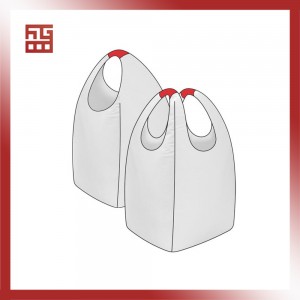
Common FIBC constructions side by side — top, loop and base combinations. Every model below is available in the dimensions, fabric weight and safety factor your load requires.

Extrusion, weaving, cutting, sewing, printing and inspection are completed in one facility, so fabric quality and stitching standards stay consistent from the first metre to the last bag.

Type C cloth is woven with conductive filaments or conductive tapes running through both directions of the weave. The result is not a coating on the outside of the bag but a connected grid inside the fabric itself — panel, seam and loop all tied into the same network.
A grid on its own stores nothing and carries nothing. The bag has a grounding tab sewn on at a marked point; during filling and discharge a verified earth lead is clamped to that tab, and the charge the product generates while it moves is carried away to earth instead of collecting on the cloth.
This matters where a combustible dust cloud can form. In those areas a spark off an ungrounded bag is an ignition source, which is why the tab is treated as part of the bag and not as an accessory — and why the ground path is checked before each fill rather than once at installation.
The fabric is half the protection. The other half is the clamp on the tab — one without the other does nothing.
Conductive filaments or tapes are woven into the fabric in both directions, so the whole bag surface forms one connected network rather than isolated strips.
A tab sewn onto the bag at an agreed position, sized for the clamp your site uses. The clamp point stays visible after the bag is filled.
With the earth lead connected, static generated by filling and discharging is carried to earth while it forms, instead of collecting on the cloth.
For powders and granules handled where a dust cloud can form — chemical powder, pigment, flour, resin — alongside the grounding procedure your site already runs.
The tab is positioned to suit your filling line, so the earth clamp is connected at the same point in the cycle every time, not wherever the operator can reach.
Filling style, discharge, liner, coating and printing stay open. Type C is the fabric specification; the bag shape is still built to your line.
Type C protection depends on the earth lead being connected and checked at every fill and discharge, so the tab position is agreed against your filling line. Tell us your target surface resistance and the test method your site uses before ordering. A non-conductive liner, a coated panel or a large printed area can interrupt the grid — send us the requirement and we will position the tab and the liner to suit.
Length, width and height set to your filling line and container plan.
Webbing width, loop length and spacing matched to your hook or tines.
Basis weight and coating chosen for load, dust and moisture.
Artwork confirmed with you before the print run starts.
Bales are pressed and container-loaded to maximise each shipment. Ocean freight for full container loads, land transport for regional delivery, air freight available for urgent samples.

Cross corner for crane and hoist lifting, where the bag hangs from four diagonal points. Side-seam when bags run on automated lines and the footprint has to stay compact and repeatable.
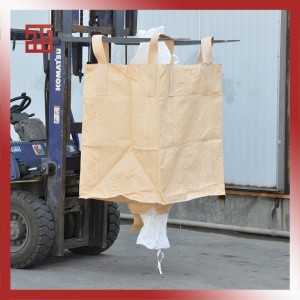
Yes. With the loops held upright, the tines pass through the loop openings for short-distance movement. For crane or hoist lifting, check that the hook or spreader bar is rated for the load.
Product must stay dry or the bag has to be dust-tight — choose coated. Product needs to breathe, or cost is the priority for a dry, coarse material — choose uncoated.
Bag size, target weight, the material, and how the bag is filled and emptied. That is enough for us to confirm fabric weight, loop specification and safety factor.